
Research team


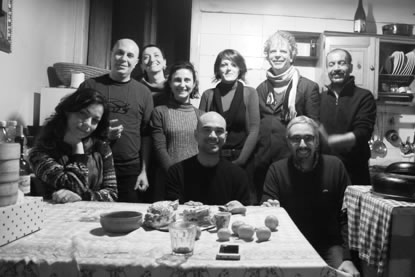
Three young researchers, Marco Salvemini, Remo Sanges and Vincenza Colonna, and two senior researchers, Giuseppe Saccone and Serena Aceto compose our research team.
The team members have a well-documented experience in genetic transformation of insects, sex determination, population genetics, evolutionary genetics, molecular evolution and bioinformatics.
The team members have known each other many years ago and the three young researcher have shared a long common educational and training course prior to the separation and diversification of their research fields and skills.
Hence, this project will benefit not only from the complementary expertise acquired by the various members throughout their careers but also from the established interpersonal relationships that will significantly increase the chances of success of the scientific project.
1. Sex determination in insects: variations on a common theme. Sex Dev. 2014.
http://www.ncbi.nlm.nih.gov/pubmed/24335049 
2. Human genomic regions with exceptionally high levels of population differentiation identified from 911 whole-genome sequences. Genome Biol. 2014.
http://www.ncbi.nlm.nih.gov/pubmed/24980144
3. De Novo Transcriptome Assembly from Inflorescence of Orchis italica: Analysis of Coding and Non-Coding Transcripts. PLoS ONE. 2014.
http://www.ncbi.nlm.nih.gov/pubmed/25025767
4. The analysis of the inflorescence miRNome of the orchid Orchis italica reveals a DEF-like MADS-box gene as a new miRNA target. PLoS ONE. 2014.
http://www.ncbi.nlm.nih.gov/pubmed/24832004
5. The orthologue of the fruitfly sex behaviour gene fruitless in the mosquito Aedes aegypti: evolution of genomic organisation and alternative splicing. PLoS ONE. 2013.
http://www.ncbi.nlm.nih.gov/pubmed/23418412
6. Integrative annotation of variants from 1092 humans: application to cancer genomics. Science. 2013.
http://www.ncbi.nlm.nih.gov/pubmed/24092746
7. Examples of sequence conservation analyses capture a subset of mouse long non-coding RNAs sharing homology with fish conserved genomic elements. BMC Bioinformatics. 2013.
http://www.ncbi.nlm.nih.gov/pubmed/23815359
8. The OitaAG and OitaSTK genes of the orchid Orchis italica: a comparative analysis with other C- and D-class MADS-box genes. Mol biol Rep. 2013.
http://www.ncbi.nlm.nih.gov/pubmed/23277396
9. Highly conserved elements discovered in vertebrates are present in non-syntenic loci of tunicates, act as enhancers and can be transcribed during development. Nucleic Acids Res. 2013.
http://www.ncbi.nlm.nih.gov/pubmed/23393190
10. An integrated map of genetic variation from 1,092 human genomes. Nature. 2012.
http://www.ncbi.nlm.nih.gov/pubmed/23128226
11. Genomic organization and splicing evolution of the doublesex gene, a Drosophila regulator of sexual differentiation, in the dengue and yellow fever mosquito Aedes aegypti. BMC Evol Biol. 2011.
http://www.ncbi.nlm.nih.gov/pubmed/21310052
12. Ceratitis capitata transformer-2 gene is required to establish and maintain the autoregulation of Cctra, the master gene for female sex determination. Int J Dev Biol. 2009.
http://www.ncbi.nlm.nih.gov/pubmed/19123132
13. Shuffling of cis-regulatory elements is a pervasive feature of the vertebrate lineage. Genome Biol. 2007.
http://www.ncbi.nlm.nih.gov/pubmed/16859531
14. The transformer gene in Ceratitis capitata provides a genetic basis for selecting and remembering the sexual fate. Development. 2002.
http://www.ncbi.nlm.nih.gov/pubmed/12117820
15. The white gene of Ceratitis capitata: a phenotypic marker for germline transformation. Science. 1995.
http://www.ncbi.nlm.nih.gov/pubmed/8533095